


How to Move a Mattress When Shifting Home: Packing and Transport Tips
Gaurav ZatakiaThe basic process for moving a mattress safely is straightforward: inspect and dry it, confirm how its construction should be handled, seal it in a properly sized cover, carry it with help, secure it inside a suitable vehicle, and inspect it again at your new home. Never fold, roll, compress, or vacuum-pack an expanded mattress unless its manufacturer explicitly permits that method.
The steps below cover within-city and intercity shifting, including apartment lifts, narrow staircases, moving trucks, humid weather, and monsoon rain. Plan your moving route, prepare and pack the mattress, transport it carefully, and check its condition before setting it up in your new home.
Step 1: Plan How to Move a Mattress Through Your Home
Start two or three days before the move. Measure the mattress length, width, and thickness, then measure doorways, lift entrances, staircase turns, corridors, and the vehicle's loading opening. A king-size mattress may need careful positioning to fit inside a lift, while narrow staircases may require professional assistance.
Complete these route checks before packing:
- Move bed-frame parts, shoe racks, plants, wall decor, and other obstacles out of the way.
- Reserve the service lift if your building requires advance booking.
- Check society rules for mover timings, lift padding, and vehicle access.
- Confirm that the moving vehicle has a clean, covered cargo area large enough for the mattress.
- Review the weather forecast and keep waterproof outer protection ready during the monsoon.
- Photograph the mattress and note existing stains, sagging, torn fabric, or damaged seams.
Ask your mover exactly how they plan to transport the mattress and whether straps, protective blankets, and a suitable truck are included. For an intercity move, also ask whether the load will be transferred between vehicles or stored overnight. Each transfer increases exposure to dirt, moisture, and rough handling.
Step 2: Inspect, Clean, and Fully Dry the Mattress
Strip off all bedding and lift the mattress off the bed base. Vacuum both faces, the side panels, piping, and seams using an upholstery attachment. If the care label permits spot cleaning, use a small amount of an appropriate cleaning product and blot the area rather than soaking it. Follow the manufacturer's cleaning instructions because foam, latex, covers, and adhesives do not all tolerate the same products.
The mattress must be completely dry before wrapping. Trapped moisture can lead to odour and mould, particularly during a humid Indian summer or monsoon. Allow the mattress to dry in a well-ventilated room, use a fan if needed, and follow the care instructions for your specific mattress model. Do not wrap the mattress until the cleaned area is completely dry.
Caution: Avoid using strong perfumes, bleach, steam cleaners, or excessive water immediately before moving the mattress. If the mattress has widespread mould, a strong persistent odour, pest activity, or serious structural damage, get professional advice before taking it into the new home.
Step 3: Match the Handling Method to the Mattress Construction
Not every mattress should be handled in exactly the same way. For example, Flo Ergo™, Flo Ortho™, and Flo Wave™ use foam constructions, while Flo Anti-Gravity™ includes a natural latex comfort layer. Flo Float™ is a pocket spring mattress with foam comfort layers. These construction differences make it important to check the handling instructions for your specific model before folding, bending, or positioning it for transport. A mattress delivered in compressed packaging was packed using factory equipment and should not be recompressed at home unless the manufacturer explicitly permits it.
Flo Sleep Capsule® is used for the factory-compressed delivery of compatible mattresses, such as Flo Ergo™. However, this delivery method does not mean an expanded mattress can be compressed again at home. When shifting homes, do not assume you can roll, vacuum-pack, or return your mattress to its original capsule. Follow the instructions for your specific model or contact Flo Mattress for guidance before attempting to change its shape.
Can a mattress travel upright?
Short answer: sometimes. Upright transport may be suitable if the mattress manufacturer permits it and the vehicle can support and secure the mattress safely. If permitted, position it against a clean, flat surface and secure it without overtightening the straps. For longer journeys or more flexible constructions, flat transport may provide more even support. Follow model-specific instructions whenever available.
Step 4: Gather Mattress Packing Materials and Wrap It
Useful mattress packing materials include:
- A new, heavy-duty mattress moving bag in the correct size
- Strong packing tape for sealing the bag, not for sticking directly to fabric
- Clean moving blankets or corrugated sheets for added outer protection
- Corner protectors for the mattress, especially when moving through lifts or loading it into a truck
- Moving straps or rope suitable for securing cargo inside the vehicle
- Work gloves with a reliable grip
- Labels and a permanent marker
- A tarpaulin for temporary rain cover during loading, not as the only mattress cover
How to pack a mattress for moving
Use this packing sequence:
- Place the dry mattress flat on a clean sheet or raised surface.
- With one person supporting each end, carefully slide the mattress into the bag without snagging its cover.
- Push excess air out gently. Do not kneel on the mattress or use a household vacuum to compress it.
- Fold the open end of the bag and seal every opening with packing tape.
- Check the corners and seams for gaps or punctures.
- Add clean blankets or corrugated protection outside the bag if the route has rough walls or sharp lift edges.
- Label the bag with the destination room, mattress size, and handling instructions such as 'Keep dry' and 'Do not fold'.
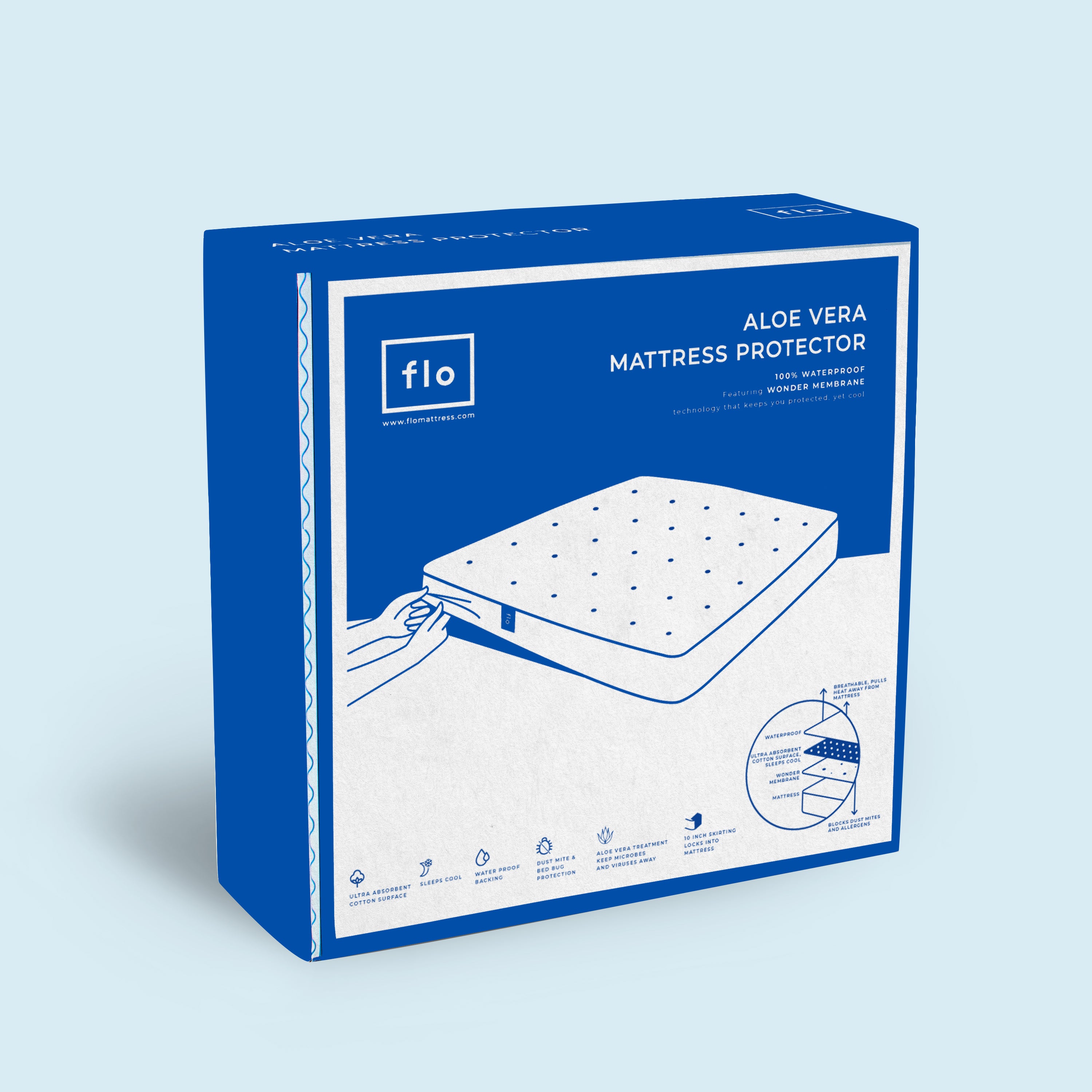
The Flo Aloe Vera Gel Infused Waterproof Mattress Protector is designed to help protect your mattress from everyday spills and moisture. For shifting homes, use a properly sized, fully enclosed mattress moving bag instead of relying on an everyday mattress protector alone. Seal the moving bag carefully and add outer protection where needed to reduce exposure to dust, dirt, and rainwater during transport.

Step 5: Carry the Mattress Without Injuring People or Property
Mattresses can be bulky and difficult to carry, even when they are not especially heavy. For most double, queen, or king-size mattresses, arrange at least two capable adults, with additional help for particularly heavy models, stairs, long corridors, or tight turns.
Tips for lifting and carrying a mattress safely:
- Wear closed footwear and gloves, then agree on commands such as lift, stop, turn, and lower.
- Lift with bent knees and a neutral back. Do not twist while carrying weight.
- Hold the lower edges with both hands. Do not lift the mattress by its piping or loose cover fabric. Use built-in handles only if the manufacturer confirms they are designed for lifting.
- Keep fingers clear of door frames, lift gates, railings, and the mattress underside when lowering.
- Move slowly around staircase landings and never allow someone to stand directly below the load.
- Use the service lift where available. Do not force the doors shut against the mattress.
Caution: Do not tie a mattress to a scooter, an auto-rickshaw roof, or a car roof that is not designed to carry it. Wind, rain, poor support, and insecure fastening create risks for the mattress, vehicle occupants, and other road users.
Step 6: Load and Secure It for Local or Intercity Transport
Before loading, check that the moving truck is clean, dry, and free from protruding nails, sharp metal edges, oil, or standing water. Ask the movers to lift the mattress carefully instead of dragging it across the floor. Keep the mattress inside its protective moving bag, use additional padding where needed, and secure it inside a covered vehicle. For apartment or intercity moves in India, also confirm how the mattress will be protected during loading, unloading, and any change of vehicle.
Practical mattress transportation tips:
- If the manufacturer recommends flat transport, support the mattress evenly across its length and width.
- If upright transport is permitted, position it against a flat side wall and use proper cargo straps to stop sliding or falling.
- Do not overtighten straps or allow thin ropes to press directly against the mattress cover.
- Keep sharp furniture corners, tools, liquids, plants, and oily items away from the mattress.
- Do not place heavy boxes, appliances, or concentrated loads on top.
- Keep the vehicle covered throughout the journey and during overnight stops.
- For intercity transport, ask the mover to avoid unnecessary transfers and keep the mattress protected at every depot.
For a short within-city move, the main concerns are repeated handling, lift access, and sudden rain. Intercity transport may also involve extended vibration, pressure from surrounding cargo, temperature changes, and temporary storage. If your vehicle cannot support and enclose the mattress correctly, use an experienced mover rather than improvising.
Step 7: Unpack, Inspect, and Set Up the Mattress
Take the packed mattress directly to the intended room before opening it. Check the outer bag for wet patches, tears, or signs of pressure damage, and photograph anything unusual. Open the packaging carefully with blunt-tip scissors, keeping the blade away from the fabric.
After delivery:
- Inspect the cover, seams, corners, edges, and sleep surface under good light.
- Compare its condition with the photographs taken before packing.
- Check for moisture or odour, then let the mattress air out in a clean, well-ventilated room.
- Place it on a compatible, stable bed base with suitable support.
- If you notice temporary surface impressions after transport, follow the manufacturer's guidance before using the mattress.
- Keep photos of the packaging and your mover's documents until you have confirmed the mattress's condition.
Short-term transport is not long-term storage
If you will not use the mattress immediately after shifting, store it in a clean, dry, well-ventilated room and follow the manufacturer's instructions for supporting it. During the monsoon, avoid damp storage rooms, exposed balconies, and direct contact with wet floors. Do not stack heavy cartons, furniture, or appliances on top of the mattress. Check for moisture before moving it onto your bed.
Step 8: Avoid These Common Moving Mistakes
Common errors that increase the risk of damage:
- Wrapping the mattress while it is damp
- Using a thin bedsheet as the only protective layer
- Applying tape directly to the mattress cover
- Dragging it across floors, stairs, or the road
- Folding or rolling it based only on how it arrived when new
- Leaving it unsecured inside a partly loaded truck
- Stacking furniture or appliances on top
- Using an open or undersized vehicle
- Storing it upright for weeks without manufacturer approval
- Discarding photographs before inspecting the delivered mattress
Step 9: Use This Final Moving-Day Checklist
Before the truck leaves, confirm that:
- The mattress is clean and fully dry.
- Its handling instructions and warranty information have been checked.
- The mattress, doorways, lift entrance, staircase turns, and vehicle loading opening have been measured.
- The mattress bag is sealed and free from tears.
- Enough helpers are available, and everyone has agreed on lifting commands.
- The cargo area is clean, dry, covered, and free from sharp objects.
- The mattress is properly supported and secured, with no heavy items stacked on top.
- Rain protection is ready, pre-move photographs have been saved, and the destination room is prepared.
If your mattress is badly damaged, unhygienic, or unsuitable for your new home, consider whether cleaning, professional assessment, or replacement is appropriate. If you decide to replace it, explore the Flo Mattress range based on your comfort preferences. Flo Ergo™ offers a softer, cushioned feel, Flo Ortho™ is designed for firmer back support, Flo Anti-Gravity™ provides balanced natural-latex comfort, Flo Wave™ suits those looking for their first foam mattress upgrade, and Flo Float™ offers a plush, hotel-like pocket spring experience. Measure your new bed frame before choosing a mattress size.
Final Thoughts: Move Your Mattress With Care
Moving a mattress safely depends on preparation, suitable support, moisture protection, careful lifting, and secure transport. Follow the instructions for your mattress model, and check its condition before putting it back into use.
Frequently Asked Questions
Can I fold a mattress while shifting homes?
Only if the manufacturer permits folding for that specific model. Pocket springs, foam layers, latex, edge reinforcements, and adhesives may respond differently to bending. When instructions are unavailable, keep the mattress in its normal shape and fully supported throughout the move.
Can I roll or vacuum-compress an expanded mattress?
Do not roll, vacuum-seal, or recompress it unless you have confirmed model-specific instructions and suitable equipment. Factory compression uses controlled machinery and purpose-built packaging. A mattress that was delivered rolled is not automatically designed for home recompression.
Is it better to transport a mattress flat or upright?
That depends on its construction, journey length, and manufacturer guidance. Flat transport provides broad support when the vehicle has enough clean space. If upright transport is permitted, rest the mattress against a flat wall inside the vehicle and secure it with straps that do not compress or damage the cover.
Can movers carry a mattress during the monsoon?
Yes, provided they use a sealed mattress bag, a covered vehicle, a dry loading area, and temporary waterproof protection between the building and truck. If the mattress cannot remain fully covered, delay loading until the heavy rain passes.
When should I hire professional movers?
Hire experienced movers when the mattress is large or heavy, stairs are narrow, the building has strict lift rules, no suitable enclosed vehicle is available, or the move involves long-distance transfers. Confirm their packing and securing method before booking.