

Mattress Buying Guide: Essential Tips for Choosing the Right Mattress
Gaurav Zatakia
The right mattress comes down to four things: your sleep position, your body weight, the firmness level that suits you, and any pain or health concerns you're trying to fix. Side sleepers generally need something softer around the shoulders and hips, back and stomach sleepers need firmer support, and most people land somewhere in the medium-firm range. Add in size, budget, and a few India-specific factors like heat and humidity, and you've got a proper checklist.
This guide walks through all of it, from figuring out when it's actually time for a new mattress to the exact material and firmness that fits your needs.
When Should You Actually Replace Your Mattress?
Most people wait far too long to change their mattress, usually until it's visibly falling apart. A few signs it's time sooner rather than later:
- It's seven or more years old. That's the general shelf life for most mattresses, even ones that still look fine on the surface.
- You wake up sore. Regular tossing, turning, or waking up with back and neck pain usually points to a mattress that's no longer supporting you properly.
- There's visible sagging or dents. Once a mattress starts dipping in the middle or where you sleep most, it's already past its prime.
- You've been diagnosed with a condition that needs specific support. Certain back, joint, or spine issues call for a mattress built around that need.
- You just want an upgrade. That's reason enough on its own.
Start With What You Already Know You Like
Before you get lost comparing specs, think back to a mattress you actually slept well on, maybe at a hotel or a friend's place. That memory tells you more about your real preferences than a spec sheet does. If you remember loving a particular hotel bed, it's worth asking what brand or type of mattress they use. From there, you can narrow down whether you're after something soft and plush or firm and supportive.
How to Choose the Right Mattress in India
Once you have a sense of what you liked before, it helps to run through a proper checklist. Here's everything worth factoring in, starting with the one thing that affects comfort the most: how you actually sleep.
Choosing Based on Your Sleeping Position
The position you fall asleep in most nights should be the starting point for everything else. Here's what tends to work best for each:
Back Sleepers
Soft mattresses tend to let your hips sink too far, throwing off spinal alignment. A firmer foam or hybrid mattress, one that combines coils with foam layers, usually gives back sleepers the support they need.
Side Sleepers
Side sleeping puts pressure directly on your shoulders and hips. A softer mattress that cushions those pressure points works best here. Pillow-top or memory foam mattresses tend to strike the right balance between comfort and support for this position.
Stomach Sleepers
Most sleep experts recommend against stomach sleeping since it can strain the neck and lower back over time. If it's the only position you can fall asleep in, go for a firm mattress that keeps your spine from dipping. Soft mattresses tend to leave stomach sleepers stiff by morning, so firm hybrid or foam options work better.
Combination Sleepers
If you shift positions through the night, you need a mattress that feels good no matter how you're lying. A medium-firm mattress usually covers all your bases here.
For a deeper look at how your sleep position affects your overall health, read our guide on the best sleeping positions.
Understanding Firmness Levels
Mattress firmness is usually rated on a scale of 1 to 10, where 1 feels like sinking into a cloud and 10 feels almost like a plank. Brands vary slightly, but the general breakdown looks like this:
| Firmness | Feel | Best suited for |
|---|---|---|
| Extra Soft (1-2) | Plush, deep sinkage | Rarely recommended, offers minimal support |
| Soft (3-4) | Cushioned, contours to the body | Side sleepers and lighter individuals |
| Medium (5-6) | Balanced softness and support | Back and stomach sleepers, most common pick |
| Medium-Firm (7-8) | Firmer with some give | Combination sleepers, people with back pain |
| Firm (9-10) | Minimal sinkage, solid feel | Stomach sleepers, heavier individuals |
If you're buying specifically for back pain, it's worth knowing there's a difference between firm support and a firm feel. A lot of people assume the hardest mattress is the safest choice, but research generally points to medium-firm mattresses working better for back pain than fully firm ones. If you want firm support without the plank-like feel, medium-firm is usually the sweet spot.
Matching a Mattress to Specific Concerns
Whatever's been disrupting your sleep, there's usually a mattress feature built to fix it:
Back Pain
An orthopedic mattress is built specifically to support the back and joints. These typically use high resilience foam along with memory foam or latex, materials that are firm but still mould to your body shape. This spreads your weight evenly and reduces pressure points, which helps keep your spine and joints properly aligned through the night.
Neck Pain
Memory foam and latex mattresses tend to work well here since they contour to the curves of your neck and head. With proper support, your neck muscles don't have to work as hard overnight, which can meaningfully cut down on morning stiffness.
Shoulder Pain
Pressure relief is the priority for shoulder discomfort, especially if you sleep on your side. Memory foam or hybrid mattresses with a conforming top layer let your shoulder sink in slightly while keeping your spine aligned. Medium-firm options usually balance this well.
Allergies
Look for mattresses with antimicrobial properties or natural materials that resist dust mites and allergens. This keeps your sleeping space cleaner and cuts down on nighttime sneezing or irritation.
Sharing a Bed
If you and your partner have different firmness preferences or one of you moves around a lot at night, motion isolation matters. It's worth including your partner in the decision entirely, since a mattress that works for one of you but not the other defeats the purpose. Try to spend actual time lying on any mattress you're both considering before buying.
Sleeping Hot
If you tend to overheat at night, look for a mattress with cooling technology built into the material, something that pulls heat away from your body instead of trapping it. This makes a real difference in India's climate, even without air conditioning running all night.
Snoring
An adjustable mattress or bed frame that lets you raise your upper body can help with snoring by improving your breathing position through the night.
Mattress Types by Material
Once you know your position and firmness range, the material is what actually delivers on it. Here's how the common options compare:
Memory Foam
Memory foam is a special material that moulds to the shape of an object under pressure, then slowly returns to its original form once that pressure is released. Many people prefer memory foam mattresses because they offer solid support and relieve pressure points by contouring closely to the body's shape. Memory foam mattresses typically last longer and are far less prone to sagging or lumpiness over time.
The Flo Ergo™ Memory Foam Mattress is made with gel-infused foam that responds to your body weight and temperature, moulding perfectly to your shape. It comes with Motion Isolation™ technology, so when your partner moves at night, you won't feel it or get disturbed. The Stress Release™ technology minimises pressure points and improves blood flow for deeper rest, and the whole thing is wrapped in a plush cashmere cover treated with aloe vera gel to keep your skin hydrated.
Contours to your body, isolates motion, and stays supportive for years.
Explore the Flo Ergo™ Memory Foam MattressLatex
Latex mattresses have been gaining popularity in India for their comfortable, supportive feel. Made from natural rubber sap, latex offers an airy yet supportive feel that still conforms to the body's curves. It's also naturally hypoallergenic and resistant to dust mites, which makes it a strong pick if allergies are a concern. Latex mattresses cost more upfront, but they're known for lasting longer and sleeping noticeably cooler than foam.
The Flo Anti-Gravity™ Latex Mattress is a 100% natural latex mattress and India's first mattress designed to minimise the effect of gravity, giving you a sensation close to floating on water. It comes packed with trademarked features and a 10-year warranty, making it one of the strongest latex options available online.
Experience the difference of 100% natural latex. The Flo Anti-Gravity™ Mattress is built for those who refuse to compromise on comfort, cooling, and durability.
Explore the Anti-Gravity™ Latex MattressDeciding between natural latex and latex foam? Our natural latex vs latex foam guide breaks down the difference in detail.
Orthopedic
An orthopedic mattress is built to give your back and joints exactly the kind of support they need. The Flo Ortho™ Mattress is a strong example of this. It's built with Pain Release™ technology to keep your spine in its natural S-shape while you sleep, which makes a real difference if you're dealing with back problems and need something firmer. It's especially well suited to older adults, particularly those over 60, who tend to prefer a harder mattress for back support. It also comes with Stress Release™ technology to ease pressure points, boost blood flow, and help you get a genuinely good night's sleep.
With a top layer of high-resilience foam, the Ortho™ delivers solid support, while the Flo Responsive™ foam underneath keeps you supported all night without sinking too much.
Built with Pain Release™ Technology to support your spine and relieve back pain, night after night.
Explore the Ortho™ Orthopedic MattressInnerspring
Two common types dominate this category. Bonnell coil mattresses use hourglass-shaped springs for consistent, uniform support and tend to feel firmer overall. Pocket spring mattresses use individually wrapped coils, which contour more precisely to the body and work well for people who need customised support.
Coir
A coir mattress, made from coconut fibre, is a distinctly Indian product. It's eco-friendly, budget-friendly, and quite firm, making it a common choice in warmer regions.
Hybrid
Hybrid mattresses combine multiple materials, like coils with foam or latex layers, to balance support and pressure relief. They suit people who need a mix of both rather than committing to a single material type.
Getting the Size and Thickness Right
Indian bed sizes don't always match international standards, so it's worth double-checking dimensions before you buy:
| Bed Type | Approx. Size | Best For |
|---|---|---|
| Single/Twin | 36" x 75" | One person, kids' rooms |
| Double | 54" x 75" | One adult, or a parent and young child |
| Queen | 60" x 78" | Two people, standard bedrooms |
| King | 72" x 84" | Two people, spacious bedrooms |
For the complete breakdown including all standard and custom sizes, check our mattress size chart for India.
Thickness is worth checking too. Most mattresses in India fall between 6 and 9 inches, and a thicker mattress usually comes with a higher price tag. For a full explanation of how thickness affects comfort and support, see our guide to choosing mattress thickness.
Practical Details Buyers Often Overlook
These rarely show up on a spec sheet, but they're worth asking about before you buy:
Durability
This comes down to the material. Basic cotton mattresses wear out far faster than foam, latex, or hybrid options, so it's worth checking what's actually inside before you buy on price alone.
Edge Support
This matters more than people expect, especially on thinner mattresses. Without proper edge support, the sides of the mattress can sink when you sit or sleep near the edge. Thicker mattresses are less affected by this.
Weight
A very light mattress often means fewer support layers, so don't assume lighter automatically means better value.
Removable, Washable Covers
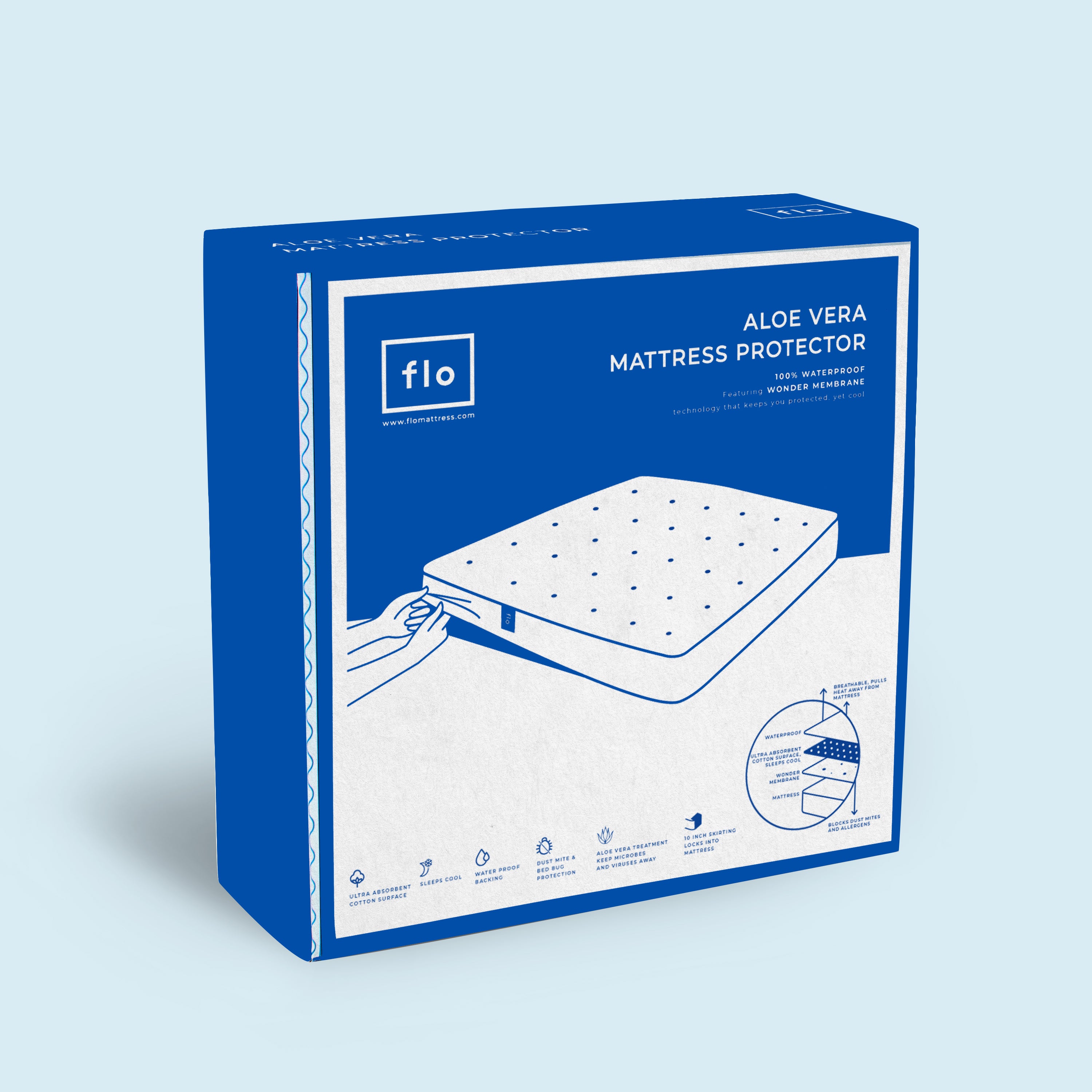
Not many brands offer this, but it's a genuinely useful feature. A removable cover protects the mattress from stains and can be washed as needed, keeping your sleep surface cleaner over time.
Certifications
Certifications confirm you're getting a genuinely safe product. Flo's Anti-Gravity Latex Mattress, for instance, is OEKO-TEX certified, meaning it's tested and confirmed free of harmful substances.
Reversibility
A reversible mattress gives you two firmness levels in one, so you can flip it if your preference changes rather than buying an entirely new mattress.
Buying Online vs In-Store
Both options work, but they come with different trade-offs. Physical stores let you feel a mattress before buying, though a few minutes of lying down in a showroom rarely tells you how it'll feel after a full night's sleep. Online mattress brands typically cut out retail markups, which means better prices, and most offer a proper trial period so you can test it at home for real. If you go online, check that the brand offers hassle-free returns and a trial long enough to actually judge comfort, ideally 30 days or more.
Delivery matters too. Many online brands now ship mattresses compressed in a box, which makes them far easier to bring home and set up yourself compared to a bulky in-store delivery.
Smart Shopping Tips
- Set a real budget and stick close to it. Mattress prices vary widely, so decide what you're comfortable spending before you start browsing, and look for options within that range.
- Time your purchase around sale season. Many brands run seasonal sales, which is a good window to get a quality mattress without paying full price.
- Check independent reviews. Marketing copy only tells you so much. Real customer reviews, especially ones that mention long-term durability, give a more honest picture.
- Actually use the trial period. Lying on a mattress for fifteen minutes in a showroom isn't the same as sleeping on it for a week. Use the full trial period in your normal sleeping position before deciding it's a keeper.
- Confirm the warranty details. Look for at least a 10-year warranty and understand exactly what it covers before you commit.
Ready to find the right mattress for you?
Flo mattresses start at ₹4,839 and come with a 100-night trial and a 10-year warranty.
Closing Thoughts
Finding the right mattress in India comes down to understanding your sleeping style, body weight, and budget, then narrowing down the material and firmness that fit those needs. It's worth taking the time to test properly and ask questions rather than rushing the decision. A good mattress is one of the few purchases that affects your health every single night, so it's worth getting right.
FAQs
How often should I replace my mattress?
Most mattresses should be replaced every 7 to 10 years, since they gradually lose support and comfort even if they still look fine on the outside.
How do I know what firmness level is right for me?
Firmness preference is personal and depends on your sleep position and body weight. Side sleepers generally do better with softer mattresses, while back and stomach sleepers usually need something firmer. Testing a few options is the most reliable way to know for sure.
What mattress material is best?
It depends on what you're looking for. Memory foam and latex are popular for pressure relief, while innerspring and hybrid options offer strong support and durability. There's no single best material, only what suits your needs.
What size mattress should I buy?
That depends on your bed frame, room size, and whether you're sharing the bed. Queen and king sizes suit couples, while single or double works well for one person. Check our size chart for exact dimensions before buying.
How much should I spend on a mattress?
Prices vary depending on material, size, and brand. It's worth investing in a mattress that offers real support and comfort, but the right price is whatever fits comfortably within your budget.
Should I buy a mattress online or in-store?
Both work well. Online buying often comes with better pricing and a proper trial period, while in-store lets you test the feel immediately. Whichever you choose, make sure there's a clear return policy and a reasonable trial window.
What's the best way to test a mattress?
Lie on it for at least 15 to 20 minutes in your usual sleeping position rather than just sitting on the edge. If you're buying online, use the full trial period at home before deciding.
Is a firm mattress always best for back pain?
Not necessarily. Research generally points to medium-firm mattresses working better for back pain than fully firm ones, since they support the spine without feeling like sleeping on a plank.
How important is a warranty?
A warranty protects you against defects and reflects how confident a brand is in its product. Look for at least 10 years of coverage and read the details on what's actually included.