

Rotate or Flip a Mattress? A Simple Schedule by Mattress Type
Gaurav ZatakiaMost people either never rotate their mattress or do it so sporadically it might as well not count. Then a few months later, one side has a dip and the other somehow feels oddly firm. If that sounds familiar, the solution is straightforward - but it hinges on what your mattress is made of.
Rotation is a 180-degree turn on the same sleeping surface: the foot becomes the head. Flipping is a full turnover so the bottom becomes the top. Flo mattresses are reversible, so you can both rotate and flip them. Rotation helps distribute wear more evenly, while flipping also lets you switch between the regular comfort side and the firmer base side depending on your preference.
Why This Actually Matters for Your Mattress Life
Night after night, your weight hits the same hotspots - hips, shoulders, lower back. Those areas compress faster than the rest of the bed, and the imbalance adds up. That is how you end up with sagging, body impressions, and the annoying sensation of sliding into the same groove every time you roll over.
Rotation spreads that stress around. The Better Sleep Council notes that caring for a mattress - including regular rotation, using a protector, and making sure the bed has proper support - can extend how long it stays comfortable. A mattress that gets ignored for years often gives out early, not because it was junk, but because the same small section of foam or springs took the brunt of your sleep for far too long.
The hard part is not the physical act of turning the thing. It is knowing how and when to rotate or flip your mattress as part of regular care.
The Difference Between Rotating and Flipping
Rotating and flipping serve slightly different purposes. Rotating a mattress changes which end supports your upper and lower body, helping distribute wear more evenly over time.
Flipping changes the sleeping surface entirely. Flo mattresses are reversible, which means both sides can be used for sleeping. The regular side provides the mattress's intended comfort feel, while the reverse base side offers a firmer sleeping surface.
So with a Flo mattress, you do not have to choose between rotating and flipping. You can rotate it as part of regular mattress care and flip it whenever you prefer a firmer feel.

A Rotation Schedule by Mattress Type
How often you should do this comes down to materials and construction. Here is the practical version, broken out by type.
Memory Foam Mattresses
Flo memory foam mattresses are reversible and can be used on both sides. The regular sleeping side provides the intended comfort and pressure-relieving feel, while the reverse side uses the firmer base layer as the sleeping surface.
If you prefer a firmer feel, simply flip the mattress and sleep on the other side. You can also rotate the mattress periodically to help distribute wear more evenly.
Latex Mattresses
Flo latex mattresses are also reversible. You can use the regular side for the standard comfort feel or flip the mattress and sleep on the firmer side if you prefer greater firmness.
Rotating the mattress periodically can also help promote more even wear across the sleeping surface.
Innerspring and Hybrid Mattresses
Flo mattresses are designed to be reversible, including models with different internal constructions. Both sides can be used for sleeping.
Use the regular side for the intended comfort feel, or flip the mattress to the firmer base side when you want a firmer sleeping surface. Periodic rotation can also help distribute wear more evenly.
Orthopaedic and Firm Foam Mattresses
Flo Ortho™ Mattress and other Flo orthopaedic mattresses are also reversible. You can sleep on the regular side for the intended comfort and support feel or flip the mattress to use the firmer base side when you prefer a firmer sleeping surface. Periodically rotating the mattress can also help distribute wear more evenly across the surface.
How to Actually Do It Without Wrecking Your Back
King-size mattresses are considerably heavier than smaller mattress sizes, so rotating one is usually a two-person job to avoid injury or damage. The Better Sleep Council. Caring for a Mattress guide emphasizes safety. Do not try to muscle it around solo. Grab a second person, clear space around the bed, and strip off the bedding first.
For rotation: each person takes a side, grips near the middle, and "walks" the mattress around 180 degrees while keeping it flat on the frame. The goal is controlled sliding, not a dramatic lift-and-twist. Hauling foam upright and spinning it can crease or fold it under its own weight, which is the opposite of helpful.
For flipping a Flo mattress: carefully tip the mattress onto its side, then lower it onto the opposite face. Larger mattresses are easier and safer to handle with two people. Move slowly, keep hands clear, and make sure the frame can handle the shifting load as you turn it over.
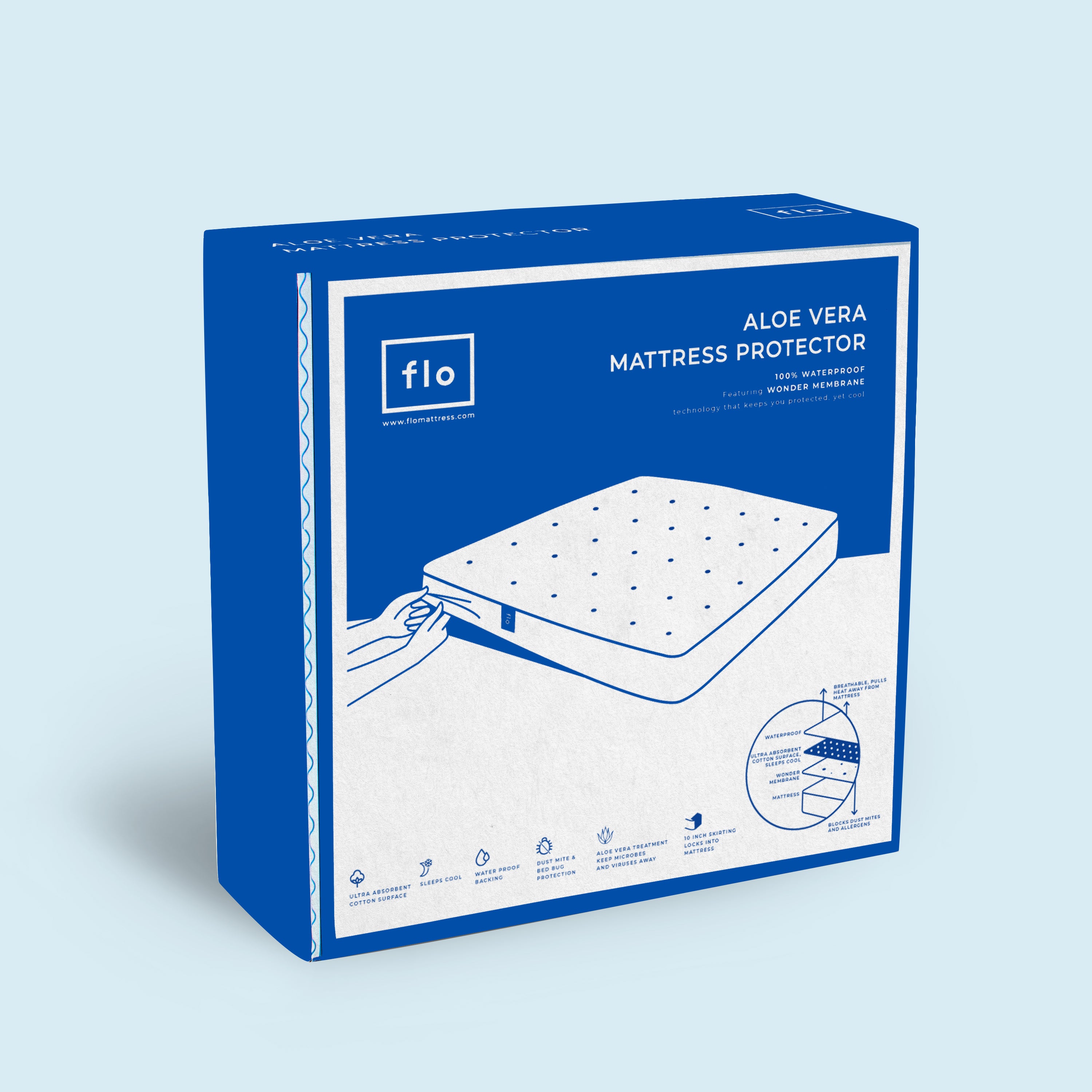
With the mattress moved, take a minute to look at the base: frame, slats, and center support. A cracked or sagging slat undercuts everything you are trying to accomplish. If you do not already use one, put a mattress protector back on before the sheets. It helps block moisture and dust - the kind of slow, unglamorous wear that breaks down foam from the outside in.
When Rotation Won't Fix the Problem
Rotation is prevention, not time travel. If your mattress has developed deep, permanent body impressions or no longer provides consistent support, rotation is unlikely to restore its comfort or performance. That is a replacement decision, not a maintenance tweak, as explained by the Sleep Foundation. When Should You Replace Your Mattress?.
A few other cases where rotation will not move the needle: a queen or king on a frame without proper center support (that sag is structural), a mattress that is well past its intended lifespan (many quality foam mattresses are designed to provide years of reliable support when properly maintained, although lifespan varies depending on materials, usage, and care), or a bed that never matched your body weight or sleep position in the first place. You cannot rotate your way out of the wrong mattress. The Sleep Foundation. When Should You Replace Your Mattress? provides more detail on this.
So treat rotation like brushing your teeth: start early, do it on a schedule, and it pays off over time. Start after the wear is obvious and you are mostly just rearranging the damage.
Common Misconceptions Worth Clearing Up
"Rotating more often is always better." Not necessarily. A regular rotation routine can help distribute wear, but there is no need to rotate the mattress excessively. Follow Flo's recommended care instructions for your specific mattress.
"My mattress is too new to need rotating." The early rotations matter most. New foam is still settling under nightly pressure, and the first few months set the pattern for how it breaks in. Establishing a regular rotation routine early in your mattress's life helps distribute wear more evenly over time, a point emphasized by the Better Sleep Council. Caring for a Mattress.
"If it feels fine, it doesn't need rotating." This is how people end up surprised by a dip they swear was not there. Wear creeps in slowly, and your body adjusts to small changes until they are no longer small. By the time the mattress feels obviously wrong, the impressions are usually well established. Rotation works best as a habit you keep, not a fix you try once you are uncomfortable.
Key Takeaways
If you just want the schedule without the nuance:
● Flo mattresses are reversible and can be slept on from either side.
● Use the regular side for the standard comfort feel.
● Flip to the base side when you prefer a firmer sleeping surface.
● Periodic rotation can help distribute wear more evenly.
● Starting a regular rotation routine early helps distribute wear more evenly throughout the mattress's life.
● Rotation slows uneven wear; it does not undo it. Deep body impressions usually mean it is time to replace the mattress.
● Larger mattresses are easier and safer to rotate or flip with two people.
● For best results, pair regular mattress care with a mattress protector and occasional frame checks.
Before you decide whether to replace or just maintain your mattress, understanding its specific needs is key. Explore our mattress collection to see how modern designs are built for longevity, or check our care resources for more tips on getting the most out of your current bed.
Frequently Asked Questions
Can Flo mattresses be flipped?
Yes. Flo mattresses are reversible and can be used on both sides. Sleep on the regular side for the standard comfort feel, or flip the mattress to the firmer base side if you prefer a firmer sleeping surface. For additional product care details, see Flo's returns and warranty page.
Is it safe to rotate a mattress by myself?
A single or twin is usually manageable alone. Large foam mattresses are heavy enough that rotating them is usually safer with two people. A queen or king is realistically a two-person job. The Better Sleep Council. Caring for a Mattress guide advises getting help to avoid injury. Get help, clear the area, and move slowly.
Does rotating a mattress really matter?
Yes - if you do it consistently. Rotation shifts where your body applies pressure over time, which slows the buildup of body impressions and sagging. The Better Sleep Council includes regular rotation as part of caring for a mattress to extend lifespan and maintain comfort.
Which side of a Flo mattress should I sleep on?
You can sleep on either side of a Flo mattress. Use the regular side for the standard comfort feel. If you prefer a firmer sleeping surface, flip the mattress and use the firmer base side.
Should I still rotate my mattress if I use a mattress topper?
Yes. A topper changes the surface feel, but the mattress underneath still takes uneven pressure over time. Rotate the mattress on its normal schedule, and if your topper is reversible, rotate that separately. Putting a mattress protector between the topper and mattress can also help protect both from moisture and wear.