

What Is Edge Support in a Mattress?
Gaurav Zatakia
Edge support refers to how well a mattress supports your weight around its perimeter. Good edge support makes it easier to sit or sleep near the edge, helps prevent sagging, and allows you to use more of the mattress surface comfortably.
You might not think about the edges of your mattress until you sit down to put on your shoes or wake up feeling like you're sliding off the side of the bed. That's where edge support makes a difference.
In this blog, we'll explain what edge support is, why it matters, who benefits from it, and what to look for when choosing a mattress.
What Is Edge Support and Why Does It Matter?
The edges of a mattress go through more stress than many people realize. Every time you sit down, get into bed, or sleep close to the side, the perimeter has to support your weight just as much as the centre.
Edge support is the part of a mattress's design that helps the perimeter stay stable under that pressure. Manufacturers achieve this by reinforcing the sides with materials such as high-density foam, stronger coils, or other structural supports. The goal is to stop the edges from compressing much more than the rest of the mattress.
A mattress with good edge support feels more stable when you sit on the side, gives you more usable sleeping space, and is less likely to develop sagging around the perimeter from everyday use.
It's also worth remembering that edge support doesn't change whether a mattress feels soft or firm. Instead, it helps the mattress maintain its shape and provide more consistent support across the entire sleeping surface.
What are the Top Benefits of Edge Support
Edge support might not be the first feature you look for when buying a mattress, but it affects how the mattress feels and performs throughout its life. Here are some of the biggest advantages.
-
Provides More Consistent Support Across the Mattress
A good mattress should feel supportive wherever you sleep, not just in the centre.
Strong edge support helps distribute weight more evenly across the entire surface, so the edges don't feel dramatically weaker than the middle. This creates a more balanced sleeping experience, especially if you tend to move around during the night.
-
Helps Prevent Premature Sagging
The edges of a mattress experience more wear than many people realize.
Every time you sit down, get into bed, or climb out, the perimeter absorbs concentrated pressure. Reinforced edges help that area cope with daily use, making it less likely to develop noticeable sagging before the rest of the mattress.
-
Makes the Edges Feel More Stable
Nobody enjoys feeling like the mattress is collapsing underneath them while sitting on the side.
A stronger perimeter provides a more stable surface, making everyday movements feel more secure.
-
Reduces the Roll-Off Feeling
Sleeping close to the edge shouldn't feel uncomfortable.
When the perimeter collapses too easily, you may feel like you're slowly rolling toward the floor, even if you aren't actually falling off the bed. A mattress with proper edge support keeps the sides more stable, helping you feel secure wherever you sleep.
-
Gives You More Usable Sleeping Space
Weak edges often go unused because they don't feel as supportive as the centre.
With better edge support, you can comfortably use more of the mattress surface. This becomes especially useful when two people share a queen-size mattress or king-size mattress, since each person can spread out without avoiding the edges.
-
Helps Protect the Mattress Structure
The edges play an important role in supporting the mattress as a whole.
If the perimeter starts breaking down early, it can place extra stress on the layers underneath. Strong edge support helps the mattress maintain its overall shape, allowing the comfort and support layers to perform as intended for longer.
Who Should Care About Edge Support?
Not everyone places the same demands on a mattress. For some people, edge support is simply a nice feature to have. For others, it can make a noticeable difference to comfort, stability, and how long the mattress continues to perform well.
Here's who is likely to benefit the most from good edge support.
-
Couples Sharing a Bed
Sharing a mattress means making the most of every inch of sleeping space.
If the edges feel weak, you may naturally avoid sleeping near them because they don't feel as supportive. That can leave both sleepers feeling cramped, even on a larger bed.
A mattress with good edge support lets you comfortably use more of the surface, making a queen size mattress or king size mattress feel more spacious without compromising stability.
-
People Who Frequently Sit on the Edge
Many people sit on the edge of the bed while reading, using their phone, getting dressed, or putting on shoes.
If that's part of your daily routine, reinforced edges can make the mattress feel much more stable and comfortable during those moments.
-
Heavier Sleepers
The more weight a mattress supports, the harder its materials have to work.
For heavier sleepers, the edges can compress more deeply if they aren't properly reinforced. This may make getting in and out of bed feel less stable and can increase wear around the perimeter over time.
A mattress with strong edge support helps distribute weight more evenly and keeps the edges feeling supportive, even under greater pressure.
Edge Support Performance of Different Mattress Types
Here's a general comparison.
| Mattress Type | How the Edges Are Supported | Best Suited For | Typical Edge Support |
|---|---|---|---|
| Innerspring | Many models use thicker perimeter coils, steel border rods, or reinforced edge sections to strengthen the sides. | People who sit on the edge often, heavier sleepers, and anyone looking for a firmer, more stable feel. | Generally Strong |
| All Foam | Edge performance depends on the design. Some use high-density foam around the perimeter, while others have little or no dedicated reinforcement. | Sleepers who want pressure relief and motion isolation but should check whether the mattress includes reinforced edges. | Varies Widely |
| Hybrid | Combines a supportive coil system with foam comfort layers. Many hybrids also reinforce the outer coils or foam perimeter for added stability. | Couples, combination sleepers, and people looking for a balance of comfort and support. | Generally Strong |
| Latex | Latex naturally has more bounce and resilience than most foams, helping the edges recover well even without heavy reinforcement. | Sleepers who want responsive support with a comfortable amount of cushioning. | Moderate to Strong |
What are the Types of Mattress Edge Support Systems
Mattress manufacturers use different methods to strengthen the perimeter. Some rely on reinforced foam, while others build support directly into the spring system.
Here's a closer look at the most common edge support systems.
-
Foam Encasement
Foam encasement is one of the most widely used edge support systems, especially in hybrid and all-foam mattresses.
A layer of high-density foam is placed around the perimeter of the mattress, creating a stronger border than the comfort layers in the middle. This helps the edges stay more supportive when you sit or sleep near them while also helping the mattress maintain its overall shape.
-
Coil Reinforcement
Many innerspring and hybrid mattresses strengthen the perimeter by using thicker or firmer coils around the outer edge.
Because these coils are designed to resist compression better than standard coils, the edges feel more supportive when sitting or sleeping near them.
-
Polyurethane Foam Rails
Some manufacturers reinforce only the perimeter by adding strips of high-density polyurethane foam around the mattress.
These foam rails help improve edge stability without changing the feel of the main comfort layers. They're commonly found in all-foam and hybrid mattresses.
-
Edge Guards
Edge guards are dedicated structural components added around the perimeter to improve stability and reduce compression.
Depending on the mattress design, they may be made from dense foam, reinforced springs, or other supportive materials that help the edges maintain their shape over time.
-
Steel Border Rods
Traditional innerspring mattresses sometimes use a heavy-gauge steel wire that runs around the outside of the spring unit.
This border rod helps keep the perimeter from bending outward under pressure, creating a firmer and more stable edge while also helping the mattress maintain its overall shape.
6 Tips to Protect Your Mattress's Edges
Even a mattress with good edge support benefits from proper care. Small habits can reduce unnecessary stress on the perimeter and help the mattress maintain its shape for longer.
Here are a few simple ways to protect the edges of your mattress.
-
Use a Sturdy, Well-Fitted Base
Your mattress is only as supportive as the foundation underneath it.
A weak, uneven, or poorly fitted base can put extra pressure on certain parts of the mattress, including the edges. Using the right bed base helps distribute weight evenly and supports the entire mattress as intended.
-
Make Sure Your Bed Frame Provides Proper Support
An unstable bed frame can cause the mattress to flex in ways it wasn't designed to.
If your frame wobbles, has damaged slats, or doesn't provide enough centre support, the mattress edges may wear down faster. Replacing an old or unsuitable frame can improve both comfort and long-term durability.
-
Add Edge Support Foam if Needed
If you're using an older mattress with noticeable edge sinkage, edge support foam can provide some additional stability.
While it won't restore a worn-out mattress to its original condition, it can reduce the feeling of excessive sinking around the perimeter and make getting in and out of bed a little easier.
-
Rotate Your Mattress Regularly
The same areas of a mattress often experience the most pressure night after night.
Rotating your mattress at the intervals recommended by the manufacturer helps spread that wear more evenly across the surface, including the edges. This simple habit can help the mattress maintain a more consistent shape over time.
-
Avoid Putting Too Much Weight on One Edge
Sitting on the same corner every day places repeated stress on one small section of the mattress.
Whenever possible, avoid spending long periods sitting on the exact same spot. Spreading out how you use the mattress can reduce concentrated wear around the perimeter.
-
Use a Mattress Protector
A mattress protector does more than protect against spills.
By helping keep moisture, dust, and dirt away from the mattress, it supports the overall condition of the materials inside. While it won't directly strengthen the edges, it contributes to the mattress lasting longer as a whole.
Protect Your Mattress From Everyday Wear
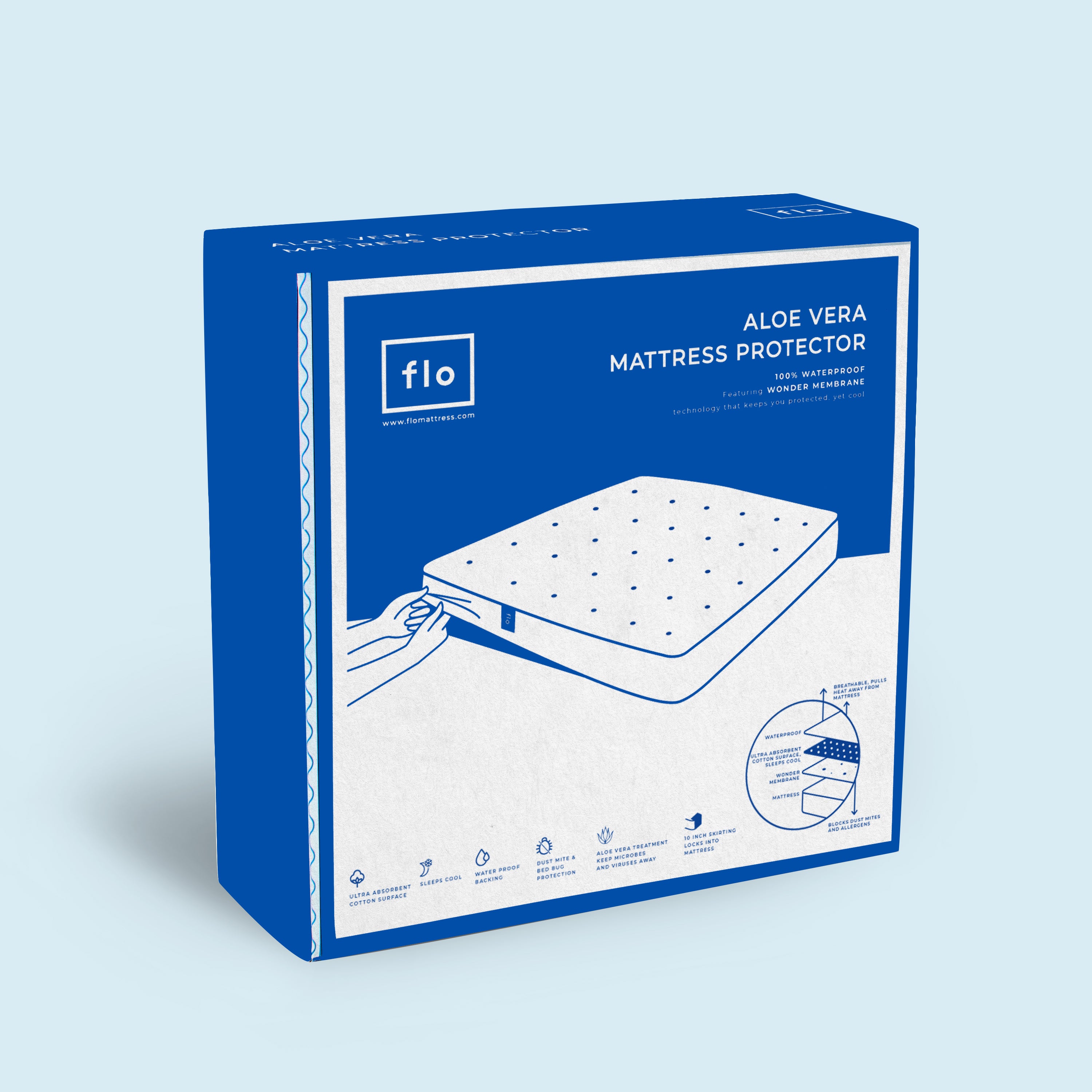
Help protect your mattress with the Flo Aloe Vera Gel Infused Waterproof Mattress Protector.
Shop Mattress ProtectorClosing Thoughts
Edge support isn't always the first thing people look for when buying a mattress, but it has a bigger impact than many realize. It affects how stable the mattress feels when you sit or sleep near the sides, how much of the surface you can comfortably use, and how well the perimeter holds up over years of everyday use.
If you share your bed, regularly sit on the edge, or simply want a mattress that maintains its shape for longer, good edge support is worth paying attention to. Along with comfort, firmness, and material quality, it's another feature that can help you choose a mattress you'll be happy with for years to come.
Looking for a Mattress With Better Overall Support?
Explore Flo's range of mattresses designed for different sleep preferences and support needs.
Explore Flo MattressesFAQs
Is edge support important in a mattress?
Yes. Good edge support helps the mattress feel more stable around the perimeter, reduces premature sagging, and lets you comfortably use more of the sleeping surface.
Do all mattresses have edge support?
No. Some mattresses include reinforced edges, while others don't. Even within the same mattress category, edge support can vary depending on the design and materials used.
Which mattress type has the best edge support?
Hybrid and innerspring mattresses generally offer the strongest edge support because many models use reinforced coils or perimeter support systems. All-foam mattresses can also perform well if they include reinforced foam edges.
Can weak edge support cause a mattress to sag faster?
Yes. The edges experience frequent pressure from sitting, getting in and out of bed, and sleeping near the sides. Without reinforcement, this area may wear down sooner than the rest of the mattress.
Is edge support important if I sleep in the centre of the bed?
Even if you usually sleep in the middle, good edge support can still help the mattress maintain its shape and structural stability over time.
How can I check edge support before buying online?
Read the product specifications carefully. Look for terms such as reinforced edges, perimeter support, foam encasement, or edge support system instead of assuming the mattress includes these features.
How can I improve poor edge support?
If your mattress is still in good overall condition, adding edge support foam or using a properly supported bed base may improve stability around the perimeter. However, if the mattress has significant wear or sagging, replacing it is often the better long-term solution.