

New Mattress Smell (Off-Gassing): Is It Harmful? How to Remove It Fast
Gaurav ZatakiaYou unbox a new mattress and the room immediately fills with that sharp, chemical-leaning smell. It is one of the most common complaints from new mattress buyers, and it usually triggers the same first question: is it safe to sleep on tonight? For most healthy adults, the answer is yes. The odor is typically more irritating than dangerous. Still, it helps to know what you are smelling, how long it tends to hang around, and what actually speeds up the fade so you can get to sleep without second-guessing it.
Below, we break down what off-gassing is, what the research and major health organizations say about VOC exposure, and the simplest ways to clear the smell quickly. If your mattress arrived yesterday or it is still lingering after a week, the same playbook applies.
What Causes the New Mattress Smell?
That "new mattress" odor is off-gassing. In manufacturing, materials such as polyurethane foam, adhesives, and some flame-retardant components can retain Volatile Organic Compounds (VOCs). When a mattress is compressed, plastic-wrapped, and sealed for shipping, those VOCs build up in a closed environment. Cut the packaging, and they start escaping into the air in your room.
VOCs are not exclusive to mattresses; they are emitted by plenty of household products, including paint, carpeting, and furniture. A mattress can feel stronger simply because it has been tightly sealed, often for weeks, concentrating the odor until the moment you open it. The American Lung Association notes that indoor concentrations of VOCs can be up to 10 times higher than outdoors. That helps explain why a freshly unboxed mattress in a closed bedroom can hit you all at once.
Is Off-Gassing Actually Harmful?
For most healthy adults, mattress off-gassing lands in the "annoying" category. Some people do report short-term symptoms such as headaches, throat irritation, or mild nausea, especially if they are sensitive to strong odors or manage respiratory conditions like asthma. In many cases, those symptoms ease once the room gets a steady supply of fresh air.
Long-term risk is generally tied to sustained, high-level VOC exposure in poorly ventilated indoor spaces, not a mattress airing out over a few days. Caution still makes sense for higher-sensitivity households. If you are pregnant, have young children, or live with a pre-existing respiratory condition, prioritize ventilation and, when you can, let the mattress air out in a separate room before it becomes the main bed.
If you want a practical filter while shopping, start with CertiPUR-US. The certification covers how polyurethane foam is made and caps VOC emissions at below 0.5 parts per million, a standard aimed at better indoor air quality. When you are comparing options like a memory foam mattress, that label is a straightforward signal that the foam meets a defined emissions threshold.
Which Mattress Types Off-Gas the Most?
Off-gassing is not one-size-fits-all. Construction materials, foam volume, and how much adhesive is used can change both how strong the smell is on day one and how long it takes to fade.
Here is how common mattress types compare:
🛏️ Memory foam mattresses: Usually the strongest initial smell, since they rely on dense polyurethane foam and often include more adhesive layers. With good ventilation, the odor commonly fades in 3 to 7 days.
🌿 Latex mattresses: Natural latex can have a distinct initial smell that is often described as earthy or rubber-like. This odour comes from the natural material itself and is different from the chemical-like smell some people associate with newly manufactured foam products. Flo uses 100% natural latex in its latex mattress, and the initial smell typically reduces as the mattress is aired out in a well-ventilated space.
🌀 Innerspring and hybrid mattresses: Often less off-gassing than all-foam models because there is less foam overall. If there is an odor, it is usually lighter.
♻️ Bonded or rebonded foam: Frequently smells stronger because it combines foam scraps with adhesives. The off-gassing period can run longer, too.
How to Remove New Mattress Smell Fast: 5 Proven Steps
Most mattresses will air out on their own. The point of these steps is to shorten the "why does my bedroom smell like this?" phase.
Step 1: Unbox in a Well-Ventilated Space
If you have the option, open the mattress in a room with open windows and cross-breeze, not a sealed bedroom. Give it time to fully expand before you move it into place. Fresh air does more to cut the smell than any spray or cover.
Step 2: Run Fans Continuously
Set a fan near the mattress and aim it toward an open window so air moves across the surface and out of the room. If you have a ceiling fan, run it on high to keep air circulating. Keep the airflow going for at least 24 to 48 hours after unboxing, longer if the room tends to stay closed up.
Step 3: Sprinkle Baking Soda and Vacuum
Baking soda is a simple, reliable odor absorber. Cover the mattress with a generous, even layer and leave it for at least 8 hours (overnight is ideal). Then vacuum it thoroughly with an upholstery attachment. This is a common home fix for a reason: it works, especially when paired with ventilation. If the smell is stubborn, repeat on the other side of the mattress as well.
Step 4: Avoid Covering the Mattress Too Soon
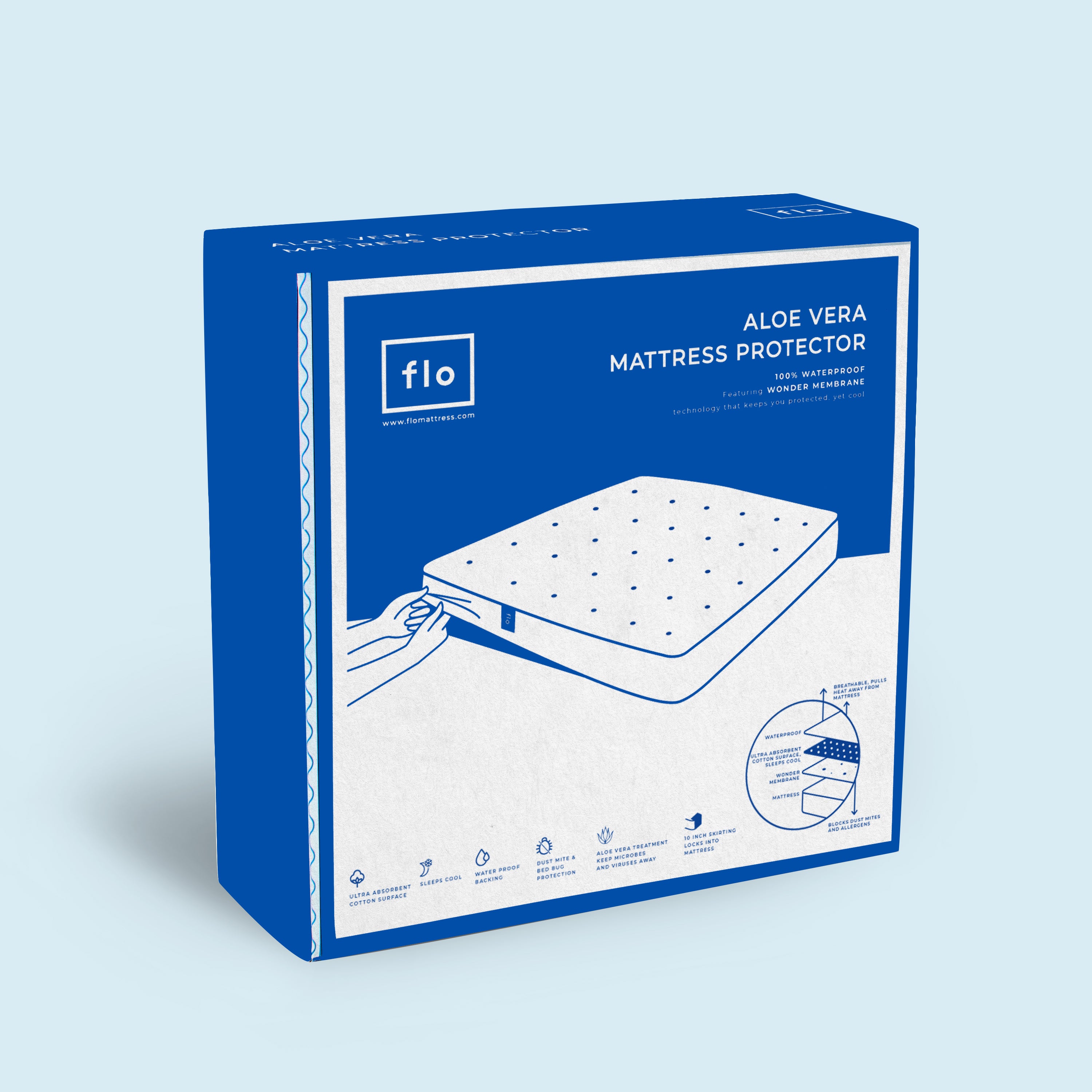
Putting sheets on immediately feels productive, but it can trap off-gassing compounds close to the surface. Give the mattress at least 24 hours uncovered, and 48 to 72 hours if you can, before adding a protector and bedding. After that initial airing-out window, a good mattress protector helps with the long game: keeping sweat, moisture, and stains from turning into the next odor problem.
Step 5: Use an Air Purifier if Sensitivity Is a Concern
If someone in the home is highly sensitive to smells or has a respiratory condition, an air purifier with an activated carbon filter can reduce VOCs in the air more aggressively than airflow alone. It is optional for most rooms, but it can make the first day or two more comfortable when ventilation is limited.
How Long Does the New Mattress Smell Last?
With good ventilation, most mattresses lose the noticeable smell within several days. Some all-foam mattresses may retain a noticeable odor for up to two weeks depending on ventilation and room conditions. Natural latex mattresses generally produce a milder odor than polyurethane foam and the smell often dissipates more quickly, although the exact timeframe varies with ventilation and product materials. If you are still dealing with a strong chemical odor after two weeks of active ventilation, check in with the manufacturer; that is outside the usual off-gassing window.
Temperature and humidity matter, too. Warm air tends to speed up off-gassing, which can make the smell punchier at first but shorter-lived overall. Cooler, humid rooms slow things down. In Indian summers, that often works in your favor: heat helps VOCs release and dissipate faster than they would in an air-conditioned room held at 18 degrees.
What to Look for When Buying to Minimize Off-Gassing
If you are still shopping and want to reduce off-gassing upfront, focus on the signals that are measurable. Certifications tend to carry more weight than broad brand promises. CertiPUR-US certified foam, for example, caps VOC emissions at below 0.5 parts per million. If reducing initial mattress odour is an important consideration, look at the materials used, certifications, and overall construction. Different mattress materials can have different initial smells, and the intensity can vary depending on packaging, ventilation, and individual sensitivity. Natural latex mattresses may have a natural rubber-like smell initially, while foam-based mattresses may have a different type of new-product odour.
Customer reviews can also be surprisingly useful if you read them with a narrow goal: look for mentions of smell and how long it lasted. Recent buyers often describe the intensity of the first-day odor and when it finally disappeared, which is more actionable than a marketing line about being "odor-free." For more real-world context across mattress types, the Flo Mattress blog is a good place to scan buyer-facing guidance and expectations.
If your concern is odors over the life of the mattress, not just the first week, it is worth bookmarking advice on how to remove other smells from a mattress. Sweat, moisture, and accidents can create stubborn smells later, and the same basics (airflow and baking soda) still do most of the work.
When Should You Be Concerned?
Many people can sleep on a new mattress after 24 to 48 hours of airing out, even if a faint odor is still there. A longer wait is smart in a few cases. If anyone at home has severe asthma, chemical sensitivities, or a compromised immune system, plan for at least 72 hours of ventilation before sleeping on it. Treat nurseries the same way: do not put a newly unboxed mattress straight into a baby's room without letting it off-gas first in a separate, well-ventilated space.
Off-gassing should fade, not escalate. If the smell comes with visible residue, discoloration, or gets stronger over time, that is not typical and you should contact the retailer or manufacturer. Flo offers a 100 Night Risk-Free Trial, allowing customers to experience the mattress at home and understand whether it suits their comfort preferences. Customers should review Flo's current trial terms and conditions before purchase, as policies may vary by product. The reasoning is that your body and the mattress may both need an adjustment period. Sleep experts commonly recommend allowing several weeks before judging long-term comfort, particularly with foam mattresses, which is often called the mattress break-in period.
The Bottom Line on New Mattress Smell
New mattress smell is a normal part of buying a foam mattress, and for most people it does not represent a meaningful health risk. The VOCs behind the odor dissipate with time, and ventilation does the heavy lifting. If you want the smell gone faster, unbox in a breezy room, keep fans running, and use baking soda. If you are sensitive to chemical odors or setting up a child's room, give the mattress a full 72 hours to air out before sleeping on it.
When you are ready to buy, certifications, material information, and complete mattress construction are practical factors to consider when comparing options. Flo Mattress products come with a 100 Night Risk Free Trial, allowing you to experience the mattress at home and assess its comfort before making a final decision, subject to the applicable terms and conditions.
Frequently Asked Questions
Is it safe to sleep on a new mattress if it still smells?
For most healthy adults, yes. Off-gassing odor is usually a comfort issue, not a safety one. If you are sensitive to chemical smells or have a respiratory condition, let the mattress air out for 48 to 72 hours first and keep the room ventilated while you sleep.
How long does new mattress smell last?
With good ventilation, most mattresses lose the initial off-gassing smell in 3 to 7 days. Some all-foam mattresses may retain a noticeable odor for up to two weeks depending on ventilation and room conditions. Natural latex mattresses generally produce a milder odor than polyurethane foam and the smell often dissipates more quickly, although the exact timeframe varies with ventilation and product materials.
Does baking soda work on new mattress smell?
Yes. Baking soda absorbs odor on the mattress surface. Sprinkle it evenly, let it sit for 8+ hours, then vacuum thoroughly. For stronger smells, repeat the process (and do the second side if your mattress is flippable). It works best alongside ventilation, not instead of it.
Which mattress type has the least off-gassing smell?
Different mattress materials can have different initial odours. Natural latex mattresses may have a natural rubber-like smell, while foam mattresses may have a more noticeable new-product odour depending on their construction and packaging. The experience can vary based on ventilation, room conditions, and individual sensitivity. Innerspring mattresses also tend to off-gas less than all-foam models. Memory foam is typically the strongest at the start. If off-gassing is a priority, consider a natural latex mattress or choose foam that is certified by CertiPUR-US.
Can a mattress protector help with off-gassing?
A mattress protector will not speed up off-gassing, and putting one on too soon can slow the airing-out process. Once the initial smell has cleared, a mattress protector helps prevent future odors from sweat and moisture from settling into the mattress over time.